
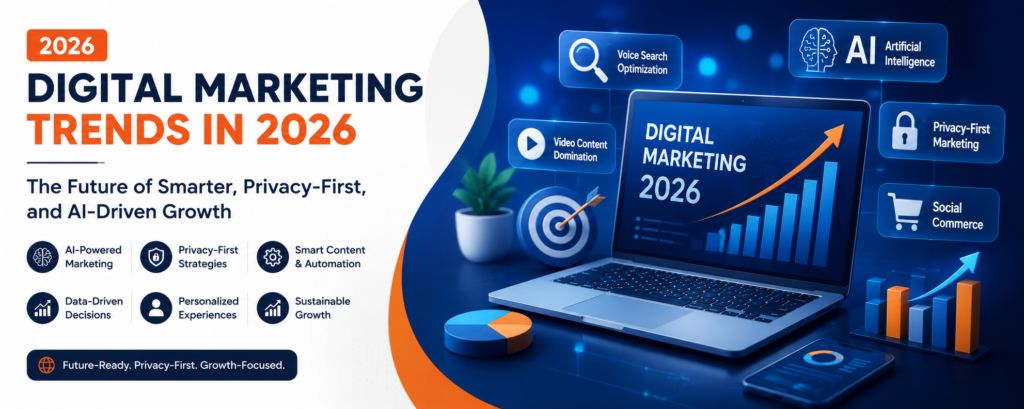
Digital Marketing Trends in 2026: The Future of Online Business Growth
Meta Title: Digital Marketing Trends in 2026 | Complete Guide to Future Marketing Strategies
Meta Description: Discover the top digital marketing trends in 2026, including AI-powered marketing, voice search, video content, social commerce, SEO, personalization, and data-driven strategies to grow your business.
Focus Keyword: Digital Marketing Trends in 2026
Secondary Keywords: AI marketing, SEO trends 2026, social media marketing, content marketing, digital advertising, voice search optimization, video marketing, marketing automation, future of digital marketing.
Digital Marketing Trends in 2026: Everything Businesses Need to Know
The digital marketing landscape continues to evolve at an incredible pace, and 2026 is proving to be one of the most transformative years for businesses worldwide. Consumer behavior, artificial intelligence, search engine algorithms, privacy regulations, and emerging technologies are reshaping how brands connect with customers. Companies that adapt to these changes can build stronger customer relationships, improve online visibility, and generate consistent business growth.
Digital marketing is no longer limited to creating advertisements or posting on social media. It now involves understanding customer intent, delivering personalized experiences, using automation wisely, and creating valuable content that genuinely solves problems. Businesses that focus on providing useful information rather than simply promoting products are more likely to earn customer trust and improve search engine rankings.
This guide explores the most important digital marketing trends in 2026 and explains how businesses can implement them effectively to stay competitive in a rapidly changing online marketplace.
1. Artificial Intelligence Is Becoming a Core Marketing Tool
Artificial intelligence has become an essential part of modern marketing rather than an optional technology. Businesses use AI to analyze customer behavior, predict buying patterns, automate repetitive tasks, and create more personalized marketing campaigns.
AI tools assist marketers with content planning, email marketing, customer segmentation, keyword research, campaign optimization, and performance analysis. Instead of replacing human creativity, AI helps marketing professionals work more efficiently while allowing them to focus on strategy and innovation.
Companies that combine AI-driven insights with human expertise can deliver faster customer service, better recommendations, and more effective advertising campaigns.
2. Search Experience Optimization Goes Beyond Traditional SEO
Search engine optimization continues to be a critical marketing strategy, but modern SEO now focuses on the complete search experience. Search engines increasingly prioritize content that answers user questions clearly, demonstrates expertise, and provides genuine value.
Businesses should optimize their websites by:
- Publishing original and informative content
- Improving website speed
- Creating mobile-friendly pages
- Using structured headings
- Optimizing internal linking
- Improving user experience
- Building topical authority
Instead of focusing only on keywords, successful websites now create comprehensive content clusters that fully cover important topics within their industry.
3. High-Quality Content Remains the Foundation of Digital Marketing
Content marketing continues to generate long-term organic traffic and customer trust. Businesses that regularly publish educational blogs, case studies, tutorials, industry insights, and practical guides often achieve stronger online visibility.
Effective content should answer real customer questions, solve problems, and demonstrate expertise. Readers appreciate content that is easy to understand, well-structured, and supported by relevant examples.
Consistency matters more than publishing large amounts of content. A steady publishing schedule helps websites build authority over time.
4. Short-Form Video Continues to Dominate
Short-form videos remain one of the most engaging content formats across multiple digital platforms. Businesses increasingly use videos to explain products, educate audiences, showcase customer testimonials, and introduce new services.
Successful video marketing focuses on delivering useful information within a short time while maintaining high production quality and authentic communication.
Educational demonstrations, behind-the-scenes content, product comparisons, frequently asked questions, and customer success stories continue to perform exceptionally well.
5. Personalized Marketing Creates Better Customer Experiences
Modern consumers expect personalized experiences throughout their online journey. Businesses now use customer preferences, browsing history, purchase behavior, and engagement patterns to deliver relevant recommendations and customized communications.
Personalization can improve:
- Email campaigns
- Product recommendations
- Landing pages
- Website content
- Promotional offers
- Customer support
When personalization respects user privacy and provides genuine value, it increases customer satisfaction and long-term loyalty.
6. Voice Search Optimization Is Becoming More Important
Voice-enabled devices continue to influence how people search online. Instead of typing short keywords, users often ask complete conversational questions.
Businesses should optimize their content by naturally answering common customer questions and creating informative FAQ sections.
Using conversational language, local optimization, and clear content structure helps websites appear more frequently in voice search results.
7. Social Commerce Continues to Grow
Social media platforms have evolved beyond communication channels into complete shopping destinations. Customers can now discover products, compare options, read reviews, and complete purchases without leaving their preferred platforms.
Businesses benefit from integrating their online stores with social media while maintaining consistent branding across every channel.
Social commerce works best when combined with engaging visual content, authentic customer reviews, and responsive customer service.
8. First-Party Data Is Becoming More Valuable
As privacy regulations continue to evolve, businesses increasingly rely on first-party data collected directly from customers.
Email subscriptions, loyalty programs, website registrations, customer feedback, and purchase history help companies better understand their audiences while respecting privacy requirements.
Building trust through transparent data practices strengthens long-term customer relationships.
9. Marketing Automation Improves Efficiency
Automation enables businesses to streamline repetitive marketing activities while maintaining consistent customer communication.
Common automation applications include:
- Welcome email sequences
- Lead nurturing campaigns
- Customer follow-ups
- Appointment reminders
- Product recommendations
- Performance reporting
Automation saves time while ensuring that customers receive timely and relevant communication.
10. Local SEO Remains Essential for Small Businesses
Businesses serving local customers should prioritize local search optimization.
Important local SEO practices include:
- Maintaining accurate business information
- Optimizing Google Business Profile
- Encouraging customer reviews
- Creating location-specific content
- Building local citations
- Using local keywords naturally
Strong local SEO helps businesses attract nearby customers actively searching for relevant services.
11. Interactive Content Increases Engagement
Interactive content encourages users to actively participate rather than passively consume information.
Popular formats include:
- Quizzes
- Polls
- Surveys
- ROI calculators
- Interactive infographics
- Product configurators
Interactive experiences improve engagement while providing valuable customer insights.
12. Email Marketing Continues to Deliver Excellent ROI
Despite the growth of new platforms, email marketing remains one of the highest-performing digital marketing channels.
Successful campaigns focus on providing educational content, personalized recommendations, exclusive offers, and valuable updates rather than overwhelming subscribers with constant promotions.
Segmented email campaigns generally achieve higher open rates and stronger customer engagement.
13. Customer Trust Is a Competitive Advantage
Consumers increasingly choose brands they trust. Transparency, authenticity, accurate information, responsive customer service, and honest communication contribute significantly to long-term success.
Businesses should focus on building genuine relationships instead of pursuing short-term marketing gains.
Customer testimonials, case studies, verified reviews, and educational resources help establish credibility.
14. Data-Driven Decision Making Improves Marketing Performance
Modern marketing relies heavily on analytics to understand campaign performance and customer behavior.
Businesses should regularly monitor:
- Organic traffic
- Conversion rates
- Customer acquisition cost
- Return on advertising spend
- Bounce rate
- Engagement metrics
- Keyword rankings
Analyzing these metrics allows marketers to continuously refine their strategies and allocate resources more effectively.
Best Practices for Digital Marketing Success in 2026
Businesses looking to remain competitive should follow these practical recommendations:
- Publish original, helpful content consistently.
- Optimize every page for user experience and mobile devices.
- Combine AI tools with human creativity.
- Invest in video marketing.
- Strengthen local SEO efforts.
- Build email subscriber lists.
- Respect customer privacy.
- Focus on long-term brand authority.
- Measure campaign performance regularly.
- Adapt strategies based on changing customer behavior.
Conclusion
Digital marketing in 2026 is centered on delivering value, building trust, and creating personalized experiences that meet evolving customer expectations. While technology continues to advance rapidly, the fundamental goal of marketing remains unchanged: connecting businesses with the right audience through meaningful communication.
Organizations that embrace artificial intelligence responsibly, prioritize high-quality content, optimize for modern search behavior, and make informed decisions using reliable data will be well-positioned for sustained growth. Rather than chasing every new trend, successful businesses focus on strategies that genuinely improve the customer experience.
The future belongs to brands that remain adaptable, invest in continuous learning, and consistently deliver relevant, trustworthy, and engaging digital experiences. By implementing the trends discussed in this guide, businesses can strengthen their online presence, improve customer relationships, and build a resilient digital marketing strategy for years to come.
SEO Elements
Focus Keyword: Digital Marketing Trends in 2026
SEO Slug: digital-marketing-trends-in-2026
Suggested Tags:
- Digital Marketing
- SEO
- AI Marketing
- Content Marketing
- Social Media Marketing
- Voice Search
- Marketing Automation
- Video Marketing
- Local SEO
- Future of Marketing
- Online Marketing
- Business Growth