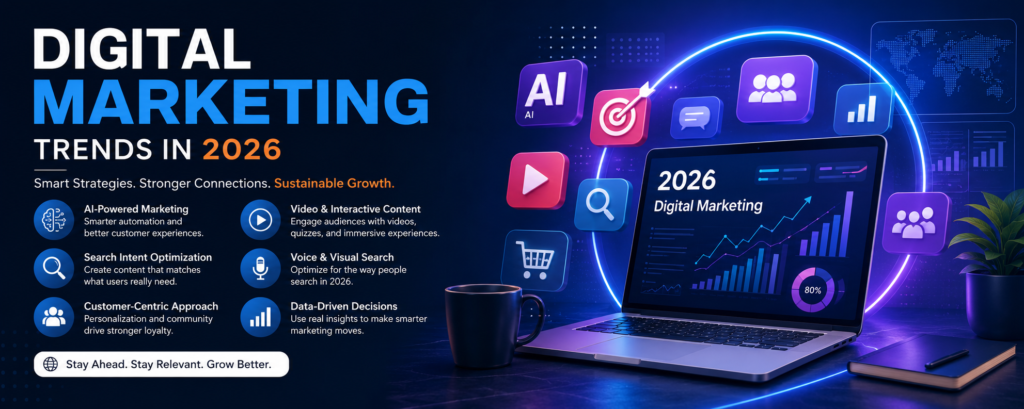
Digital Marketing Trends in 2026: The New Rules for Building Brands in an AI-Driven World
Introduction
Digital marketing has always evolved alongside technology, but 2026 represents a turning point unlike any before. Artificial intelligence has become a daily business tool rather than a futuristic concept, search engines are prioritizing user experience more than ever, and consumers expect highly personalized interactions across every digital platform.
Businesses that continue using outdated marketing techniques are finding it increasingly difficult to compete. Success today depends on understanding how technology, creativity, customer trust, and data work together.
The biggest trend of 2026 is not simply adopting new tools—it is creating meaningful digital experiences that help people solve real problems. Search engines reward helpful content, customers reward trustworthy brands, and AI rewards businesses that know how to combine automation with human creativity.
This article explores the most important digital marketing trends shaping 2026 and explains how businesses can use them to achieve sustainable growth.
Why Digital Marketing Is Entering a New Era
Digital marketing is no longer about publishing as much content as possible. Search engines have become significantly smarter, social media algorithms have matured, and consumers have developed stronger expectations.
Today’s successful brands focus on three important principles:
Deliver genuine value.
Build trust consistently.
Create personalized experiences.
Rather than chasing algorithms, marketers who prioritize customer satisfaction are seeing better rankings, stronger engagement, and higher conversion rates.
1. Artificial Intelligence Becomes Every Marketer’s Assistant
Artificial intelligence is transforming every stage of digital marketing.
Instead of replacing marketers, AI now supports them by handling repetitive tasks while humans focus on creativity and strategy.
Businesses use AI for:
Content research
Keyword discovery
Customer support
Marketing automation
Email personalization
Campaign optimization
Performance prediction
However, businesses achieving the best results are those that combine AI-generated efficiency with human editing, storytelling, and expertise.
The winning formula in 2026 is Human + AI, not Human vs AI.
2. Search Intent Is More Important Than Keywords
For years, SEO focused heavily on inserting keywords throughout a webpage.
In 2026, search engines understand context far better than exact keyword repetition.
Instead of asking:
“What keyword should I target?”
Marketers now ask:
“What problem is my audience trying to solve?”
For example, a user searching for “best digital marketing strategy for small business” expects practical advice, not a page overloaded with repeated keywords.
Understanding user intent helps websites rank for multiple related searches instead of just one keyword.
3. Experience-Based SEO Is Replacing Traditional SEO
Search engines increasingly reward content created from real-world experience.
Instead of generic information, websites performing well now include:
Practical examples
Original insights
Personal observations
Case studies
Industry knowledge
Actionable recommendations
This approach improves credibility while helping readers trust the information they consume.
Businesses that demonstrate expertise naturally outperform websites publishing generic AI-generated articles.
4. Video Content Continues to Dominate
Short-form video remains one of the most powerful digital marketing channels in 2026.
Consumers increasingly prefer watching information rather than reading long explanations.
Popular video formats include:
Educational tutorials
Product demonstrations
Customer success stories
Behind-the-scenes content
Industry tips
Live Q&A sessions
Brands publishing consistent, valuable videos build stronger relationships with audiences while improving visibility across multiple platforms.
5. Voice Search Optimization Is Becoming Essential
Smartphones, smart speakers, and AI assistants have significantly increased voice-based searches.
People now search conversationally.
Instead of typing:
“Digital marketing agency”
Users often ask:
“Which digital marketing agency offers affordable SEO services for small businesses?”
Businesses should optimize content using natural language, FAQ sections, and conversational writing styles.
Voice search optimization improves accessibility while increasing search visibility.
6. Zero-Click Searches Are Changing SEO Strategy
Many users now receive answers directly on search engine results pages without clicking any website.
This trend encourages marketers to structure content more effectively.
Successful content includes:
Clear headings
Short definitions
Bullet points
Numbered lists
Frequently Asked Questions
Well-organized information
Well-structured content has a higher chance of appearing in featured search results.
7. Personalized Marketing Is Becoming the Standard
Consumers expect brands to understand their interests.
Generic advertising is becoming less effective.
Businesses now personalize:
Product recommendations
Email campaigns
Website experiences
Advertisements
Customer support
Promotions
Personalization improves engagement because customers receive information that matches their needs instead of irrelevant marketing messages.
8. First-Party Data Is More Valuable Than Ever
As privacy regulations continue evolving, businesses rely more on first-party data collected directly from customers.
Examples include:
Newsletter subscribers
Customer accounts
Purchase history
Survey responses
Loyalty programs
Building direct customer relationships gives businesses greater control while reducing dependence on third-party tracking.
9. Social Commerce Continues Rapid Growth
Social media has evolved from a branding platform into a complete shopping destination.
Customers now discover, evaluate, and purchase products without leaving their favorite apps.
Successful brands combine:
Product videos
Influencer partnerships
User-generated content
Live shopping events
Interactive demonstrations
The purchasing journey becomes shorter and more convenient.
10. Community Marketing Builds Long-Term Loyalty
Businesses are investing in communities rather than audiences.
Communities encourage customers to interact not only with brands but also with each other.
Examples include:
Private groups
Discussion forums
Loyalty communities
Educational webinars
Customer clubs
Strong communities increase customer retention while generating valuable feedback and organic referrals.
11. Interactive Content Improves Engagement
Static webpages are giving way to interactive experiences.
Popular formats include:
Calculators
Quizzes
Polls
Interactive infographics
ROI estimators
Product configurators
Interactive content increases time spent on websites while encouraging deeper user participation.
12. Email Marketing Remains Highly Effective
Despite the popularity of social media, email marketing continues delivering one of the highest returns on investment.
Successful email campaigns focus on:
Valuable educational content
Personalized recommendations
Customer segmentation
Automation
Mobile-friendly design
Instead of sending promotional emails every day, brands build trust by consistently delivering useful information.
13. Authentic Content Outperforms Perfect Content
Consumers increasingly value authenticity over polished advertising.
Brands that openly share:
Company culture
Team stories
Customer experiences
Challenges
Lessons learned
often generate stronger emotional connections than those relying solely on professionally produced advertisements.
Authenticity creates trust, and trust drives conversions.
14. Sustainability and Brand Values Influence Buying Decisions
Modern consumers increasingly support businesses that demonstrate social responsibility.
Brands communicate:
Sustainable practices
Ethical sourcing
Community involvement
Environmental initiatives
Employee well-being
However, transparency is essential. Customers quickly recognize exaggerated or misleading claims.
15. Omnichannel Marketing Creates Better Customer Experiences
Customers interact with brands across multiple platforms before making purchasing decisions.
A typical customer journey may include:
Google Search
Instagram
YouTube
Website
Email
WhatsApp
Online reviews
Businesses delivering a consistent message across every touchpoint create stronger brand recognition and higher conversion rates.
Best SEO Practices for Digital Marketing in 2026
Search engine optimization continues evolving, but several principles remain fundamental.
Successful websites prioritize:
High-quality original content
Helpful information
Fast page speed
Mobile responsiveness
Clear website structure
Internal linking
User experience
Trustworthy sources
Consistent content updates
Instead of attempting to manipulate rankings, businesses should focus on becoming the best resource for their audience.
Challenges Businesses Should Prepare For
While opportunities continue growing, marketers also face several challenges:
Increasing competition
Rapid AI adoption
Privacy regulations
Algorithm updates
Rising advertising costs
Higher customer expectations
Businesses that remain adaptable, continuously learn, and invest in quality content will be better positioned for long-term success.
Future Outlook
Digital marketing in 2026 is becoming more intelligent, more customer-focused, and more experience-driven.
Artificial intelligence will continue improving productivity, but human creativity, empathy, and strategic thinking remain irreplaceable.
The future belongs to brands that:
Solve genuine customer problems.
Build trust through transparency.
Create valuable educational content.
Use AI responsibly.
Focus on long-term relationships rather than short-term clicks.
Marketing success is no longer measured simply by traffic or impressions. It is measured by meaningful engagement, customer satisfaction, loyalty, and sustainable business growth.
Conclusion
The digital marketing landscape in 2026 rewards businesses that embrace innovation without losing sight of the human element. AI, personalization, voice search, community building, interactive content, and omnichannel experiences are reshaping how brands connect with customers.
Rather than chasing every new trend, organizations should identify the strategies that align with their audience and business goals. By consistently producing original, helpful, and trustworthy content while leveraging modern technology wisely, businesses can strengthen their online presence, improve search visibility, and build lasting customer relationships.
The future of digital marketing belongs to brands that combine technology with authenticity, data with creativity, and automation with genuine human connection. Those who adapt thoughtfully today will be the market leaders of tomorrow.