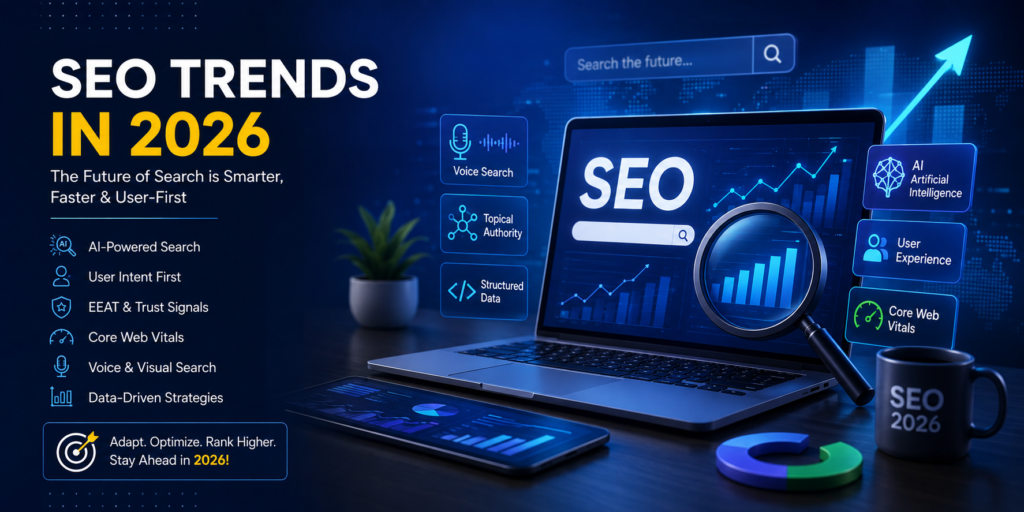
SEO Trends in 2026: The Future of Search Optimization in an AI-Driven World
Search Engine Optimization (SEO) has entered a new era. The strategies that worked just a few years ago are no longer enough to secure top rankings on Google and other search engines. In 2026, SEO is no longer just about keywords and backlinks—it is about delivering exceptional user experiences, creating trustworthy content, optimizing for AI-powered search engines, and understanding user intent better than ever before.
As artificial intelligence continues to reshape how people search online, businesses, marketers, bloggers, and website owners must adapt their SEO strategies to remain visible in search results. Search engines have become significantly smarter at identifying valuable content, rewarding websites that genuinely help users while filtering out low-quality and manipulative pages.
In this comprehensive guide, we’ll explore the most important SEO Trends in 2026, understand why they matter, and discover practical strategies that will help your website achieve long-term organic growth.
Why SEO Matters More Than Ever in 2026
Organic search remains one of the highest-converting traffic sources available. Unlike paid advertising, SEO creates sustainable visibility that continues delivering results over time.
Modern search engines evaluate hundreds of ranking signals, including:
- Content quality
- User satisfaction
- Website speed
- Mobile usability
- Authority
- Experience
- Trustworthiness
- Search intent
- Engagement metrics
- AI-generated content quality
Businesses investing in modern SEO strategies are seeing stronger brand visibility, higher-quality leads, and better long-term ROI.
1. AI Search Is Transforming SEO
Artificial Intelligence is changing how users search for information.
Instead of typing short keyword phrases, users now ask complete questions, expecting conversational answers.
Examples include:
- Best digital marketing strategies for startups
- How can I improve my local SEO in 2026?
- Which SEO tools provide the most accurate keyword research?
This shift means websites must focus on answering real questions instead of stuffing pages with keywords.
Content should be informative, structured, and easy for AI systems to understand.
2. Search Intent Becomes More Important Than Keywords
One of the biggest SEO Trends in 2026 is understanding user intent.
Search engines now prioritize pages that satisfy user expectations instead of pages that simply repeat keywords.
There are four major types of search intent:
Informational
Users want answers.
Example:
“What is Technical SEO?”
Navigational
Users want a specific website.
Example:
“Open Search Console”
Commercial
Users compare products or services.
Example:
“Best SEO tools for agencies”
Transactional
Users are ready to buy.
Example:
“Hire SEO expert”
Optimizing content for the correct intent significantly improves rankings.
3. EEAT Is a Major Ranking Signal
Google continues rewarding websites that demonstrate:
- Experience
- Expertise
- Authoritativeness
- Trustworthiness
To improve EEAT:
- Publish original research
- Include real-life examples
- Display author credentials
- Add references when necessary
- Keep content regularly updated
- Build a trustworthy brand
High-quality content consistently outperforms generic articles.
4. High-Quality Content Wins Every Time
Publishing more articles no longer guarantees better rankings.
Instead, search engines reward:
- Comprehensive guides
- Original insights
- Useful examples
- Updated information
- Practical solutions
Rather than creating ten short articles, one detailed resource often performs better.
Content should educate readers instead of simply targeting keywords.
5. Topical Authority Is Replacing Individual Keyword Ranking
Modern SEO focuses on becoming an authority in a niche.
Instead of writing isolated articles, successful websites build content clusters around major topics.
Example:
Main Topic:
Digital Marketing
Supporting articles:
- SEO
- PPC
- Social Media Marketing
- Content Marketing
- Email Marketing
- Conversion Optimization
This structure helps search engines understand your expertise.
6. User Experience Directly Impacts Rankings
Search engines increasingly measure how users interact with websites.
Important UX factors include:
- Fast loading pages
- Clean navigation
- Mobile responsiveness
- Easy readability
- Logical page structure
- Minimal intrusive popups
Visitors who enjoy your website are more likely to stay longer, reducing bounce rates and improving engagement.
7. Core Web Vitals Continue to Matter
Website performance remains a critical ranking factor.
Key performance metrics include:
- Loading speed
- Visual stability
- Interaction responsiveness
Improving these metrics results in:
- Better rankings
- Lower bounce rates
- Higher conversions
- Improved user satisfaction
Website speed optimization should be an ongoing priority.
8. Voice Search Continues Growing
Millions of users now perform searches using voice assistants.
Voice searches tend to be:
- Longer
- Conversational
- Question-based
Instead of:
“SEO tips”
Users ask:
“What are the best SEO tips for small businesses in 2026?”
Content should naturally answer conversational questions.
9. Visual Search Is Becoming Mainstream
Images now play a larger role in search visibility.
To optimize visual search:
- Use descriptive filenames
- Add meaningful alt text
- Compress images
- Use modern formats
- Include image schema where appropriate
Well-optimized images generate additional organic traffic.
10. Video SEO Continues Growing
Videos now appear throughout search results.
To improve Video SEO:
- Add transcripts
- Create descriptive titles
- Write optimized descriptions
- Include timestamps
- Use attractive thumbnails
Educational videos often rank alongside traditional articles.
11. Semantic SEO Replaces Exact Match Keywords
Search engines understand relationships between words.
Instead of repeating the same keyword dozens of times, use naturally related terms.
For example, an article about SEO may also include:
- Organic traffic
- Search rankings
- Crawling
- Indexing
- Metadata
- Search visibility
- Technical optimization
Semantic relevance improves content quality.
12. Internal Linking Becomes More Strategic
Internal links help both users and search engines.
Benefits include:
- Better crawling
- Improved authority distribution
- Increased page views
- Easier navigation
Every important page should connect naturally with related content.
13. Local SEO Keeps Expanding
Businesses serving local customers should prioritize:
- Google Business Profile optimization
- Local keywords
- Customer reviews
- Accurate business information
- Local citations
- Location-specific landing pages
Local SEO remains one of the highest ROI digital marketing strategies.
14. Zero-Click Search Optimization
Many users receive answers directly within search results.
Instead of fearing zero-click searches, optimize for them by:
- Writing concise answers
- Using structured headings
- Creating FAQ sections
- Adding schema markup
- Organizing content clearly
Featured answers increase brand visibility even without immediate clicks.
15. Structured Data Improves Search Visibility
Schema markup helps search engines understand website content.
Popular schema types include:
- FAQ
- Article
- Product
- Organization
- Local Business
- Review
- Breadcrumb
Structured data increases the chances of earning enhanced search results.
16. Mobile-First SEO Is Non-Negotiable
The majority of searches now happen on mobile devices.
Your website should provide:
- Responsive design
- Fast loading
- Readable typography
- Touch-friendly navigation
- Optimized images
A poor mobile experience negatively impacts rankings.
17. Content Freshness Influences Rankings
Updating existing content often delivers better SEO results than constantly publishing new articles.
Regular updates include:
- New statistics
- Updated screenshots
- Better examples
- Additional FAQs
- Improved formatting
Fresh content signals relevance to search engines.
18. Brand Authority Supports Organic Rankings
Strong brands naturally earn:
- Mentions
- Reviews
- Backlinks
- Social engagement
- Repeat visitors
Building a recognizable brand indirectly strengthens SEO performance by increasing trust and user engagement.
Common SEO Mistakes to Avoid in 2026
Even experienced website owners make mistakes that limit their search performance.
Avoid these common issues:
- Publishing thin or duplicate content
- Ignoring search intent
- Keyword stuffing
- Slow-loading pages
- Poor internal linking
- Broken links
- Outdated content
- Missing image optimization
- Weak title tags and meta descriptions
- Neglecting mobile usability
Consistently auditing your website helps identify and fix these problems before they affect rankings.
Actionable SEO Checklist for 2026
Use this checklist to keep your SEO strategy aligned with current best practices:
- Research topics based on user intent rather than keyword volume alone.
- Publish in-depth, original, and experience-driven content.
- Build topical authority with interconnected content clusters.
- Improve Core Web Vitals and overall site performance.
- Optimize every page for mobile devices.
- Use descriptive headings and semantic keywords.
- Add structured data where relevant.
- Keep content updated with the latest information.
- Strengthen internal linking between related pages.
- Monitor performance using analytics and search data to refine your strategy.
Following these practices consistently will help your website remain competitive as search technology evolves.
The Future of SEO Beyond 2026
SEO is no longer a standalone marketing tactic—it is an integral part of building a trusted digital presence. As AI-powered search experiences continue to evolve, success will depend on creating content that is genuinely useful, technically sound, and aligned with user intent.
The websites that thrive will be those that prioritize people over algorithms. Rather than chasing shortcuts or exploiting ranking loopholes, businesses should focus on delivering real value, maintaining high editorial standards, and continually improving the user experience.
The future belongs to brands that combine human expertise with intelligent optimization, producing content that answers questions clearly, earns trust naturally, and adapts to changing search behaviors. SEO in 2026 is not about gaming the system—it’s about becoming the most helpful and credible resource in your niche.
Conclusion
The SEO Trends in 2026 make one thing clear: search optimization has evolved far beyond traditional keyword tactics. AI-driven search, user intent, EEAT, topical authority, fast websites, semantic optimization, structured data, and exceptional user experience are now the foundations of sustainable SEO success.
Businesses that embrace these changes and invest in creating original, high-quality, user-focused content will be best positioned to earn long-term visibility and organic growth. By staying adaptable, regularly updating your strategy, and focusing on delivering genuine value, you can build a resilient online presence that performs well across Google and other search engines—today and in the years ahead.